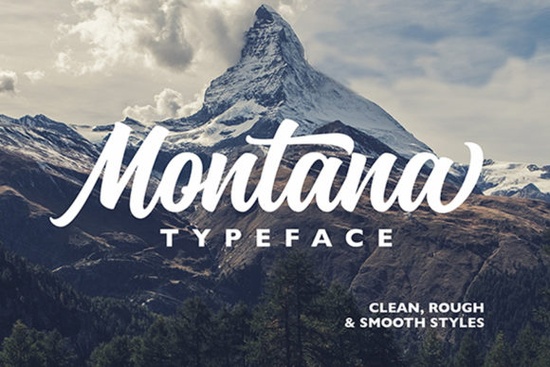
If you're looking for a bold, hand-drawn script that stands out in headlines, logos, or printed products Montana Font is worth your attention. It’s not overly delicate or fussy; instead, it balances thickness and flow with confident, slightly nostalgic energy. Designers who work on branding, craft labels, greeting cards, or social media graphics often find it especially useful when they need something legible at larger sizes but still unmistakably human-made.
What makes Montana Font different from other script fonts?
Many handwritten fonts lean either too light or too decorative but Montana sits comfortably in the middle. Its thick strokes give it presence without sacrificing readability, and its cursive rhythm feels natural, not mechanical. Because it's PUA encoded, you get easy access to alternate glyphs, swashes, and ligatures right from your character panel no complex font managers or workarounds needed. That means if you’re designing a logo in Adobe Illustrator or crafting a quote graphic in Canva (with desktop app), you can switch between stylistic versions of letters like “a”, “g”, or “t” with just a few clicks.
It’s also well-suited for projects where warmth matters: farmhouse-style signage, wedding stationery, small-batch product packaging, or even classroom posters for teachers who want friendly-but-polished typography. Unlike some script fonts that blur together at smaller sizes, Montana holds up well down to ~24pt in print though it shines brightest at 48pt and above.
Who uses Montana Font and how?
Print-on-demand sellers often choose Montana for mugs, tote bags, and wall art because its strong letterforms translate cleanly across fabric printing and ceramic sublimation. The weight helps avoid thin lines that might fade or misfire during production.
Crafters and small business owners use it for custom stickers, vinyl decals, and handmade soap labels especially when pairing it with a clean sans-serif for body text. Its confidence works well next to minimalist layouts, adding personality without overwhelming.
Designers building brand identities appreciate how Montana can anchor a visual system: think logo lockups, social banners, or email headers where tone matters as much as clarity. It reads as approachable but intentional not trendy, not dated.
How does it compare to similar script fonts?
If you’ve tried farmhouse-font-font-script-fonts, you’ll notice Montana has more contrast in stroke weight and less rustic texture making it more versatile across modern and vintage-leaning projects. For academic or study-themed designs, it’s bolder than the gentle curves of studying-font-script-fonts, so it suits motivational posters better than quiet note-taking templates.
Compared to genty-font-script-fonts, Montana feels more grounded and less airy ideal when you want impact over delicacy. And while shina-qatline-font-script-fonts leans into sharp angles and calligraphic precision, Montana offers softer entry and exit strokes, giving it a relaxed, confident cadence.
For weddings, it’s less ornate than many wedding-day-font-script-fonts, which makes it great for couples wanting elegance without formality think rustic-chic invites or casual elopement signage.
Practical tips before downloading
- Check your software supports OpenType features (most recent versions of Photoshop, Illustrator, Affinity apps, and even newer Canva desktop do).
- Test spacing first: Montana’s thick letters benefit from slight tracking adjustments in headlines try +10 to +20 depending on size.
- Pair it thoughtfully: a neutral sans-serif like Montserrat or Lato works well for supporting text; avoid other scripts unless they’re dramatically different in weight or style.
- Remember it’s a display font not meant for long paragraphs. Save it for titles, quotes, logos, and short phrases.
One last note: if you’d like to see how Montana compares visually alongside other high-quality script options, you can explore the full Montana Font preview and licensing details directly on Creative Fabrica.
Before you add it to your cart: open a mockup file you’re already working on, drop in a sample headline using Montana, and step away for five minutes. Come back and ask: Does it feel like your voice? If yes it’s probably the right fit.
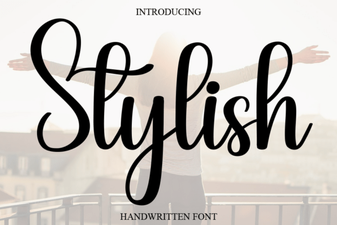 Fresh Font Designs for Modern Projects
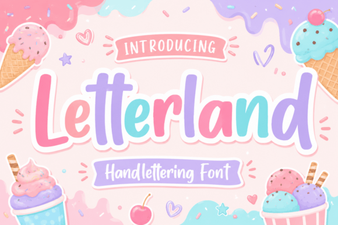 Letterland Fonts for Creative Design Projects
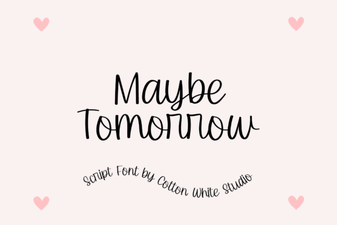 Maybe Tomorrow Font for Creative Projects
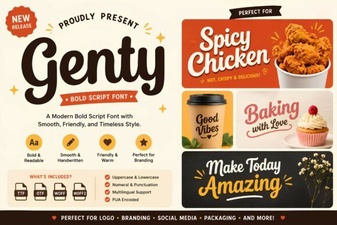 Genty Font: a Creative Typeface for Modern Design
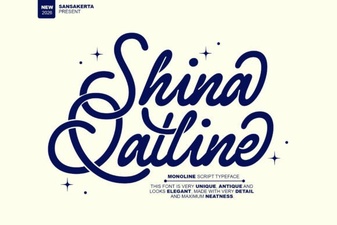 The Shina Qatline Font: Arabic Design Inspiration
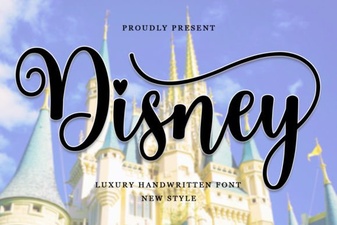 Design Ideas Using the Disney Font Style