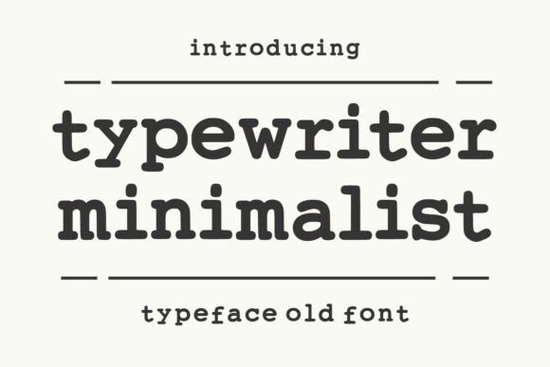
If you're looking for a clean, vintage-inspired typeface that works as well on a handmade greeting card as it does on a modern book cover, the Typewriter Minimalist Font is worth your attention. It’s not overly distressed or cartoonish instead, it captures the quiet confidence of classic typewritten documents: even spacing, subtle rounded terminals, and a monospaced rhythm that feels intentional, not mechanical. Designers and small business owners often tell us they choose it when they want authenticity without sacrificing legibility especially for print-on-demand projects like journals, stationery, or minimalist packaging.
What makes this font different from other typewriter styles?
Many “typewriter” fonts lean heavily into noise uneven baselines, heavy ink bleed, or exaggerated imperfections. Typewriter Minimalist takes a quieter approach. Its letterforms are carefully balanced, with consistent weight distribution and gentle curves at the ends of strokes. That means it scales well: it reads clearly at 10 pt in a footnote and holds presence at 72 pt on a poster. It’s also designed to pair naturally with serif and sans-serif companions something crafters appreciate when building cohesive brand kits or editorial layouts.
You’ll notice details like slightly tapered stems and open counters small refinements that improve airflow and reduce visual fatigue. Unlike some retro fonts that feel dated or gimmicky, this one stays grounded in function. It’s why you’ll see it used by indie publishers for chapter headings, wedding stationers for ceremony programs, and Etsy sellers for printable planner inserts.
Where does it work best?
This font shines where personality meets practicality:
- Book covers and interior typography especially for memoirs, poetry collections, or historical fiction
- Vintage-inspired branding think coffee roasters, local apothecaries, or artisanal paper goods shops
- Printable templates journal pages, habit trackers, and quote cards benefit from its calm rhythm
- Social media graphics short quotes or event announcements gain warmth without clutter
- Packaging labels and product tags its monospaced structure gives consistency across small-format prints
It’s not meant for long-form body text in digital interfaces (like websites or apps), but that’s by design just like choosing the right tool for a woodworking project, knowing when not to use a font is part of using it well.
How does it compare to similar fonts on Creative Fabrica?
If you’ve explored other serif fonts with nostalgic character, you might recognize how Typewriter Minimalist fits alongside options like Semika, which offers a more calligraphic, hand-drawn serif feel great for logos or invitations needing soft elegance. For contrast, Sharp History leans into sharper angles and bolder contrast, ideal for headlines that need punch. Meanwhile, Richmond Grovelyn brings a refined, transitional serif sensibility perfect for formal branding or editorial mastheads.
None of these replace each other; they complement. You might use Typewriter Minimalist for a subtitle or pull quote while pairing it with Semika for a logo, or layer it over Richmond Grovelyn in a layered typographic poster.
A note on licensing and usage
The font includes standard OpenType features (ligatures, stylistic alternates) and supports Latin-based languages. It’s licensed for both personal and commercial use including POD platforms like Redbubble, Teespring, and Printful as long as you’re embedding it in static designs (not selling the font file itself). Always double-check the license details on the product page, since terms can vary slightly depending on bundle vs. single purchase.
For reference, you can view the full family and test characters on Typewriter Minimalist Font, and compare it side-by-side with Semika Font, Sharp History Font, and Richmond Grovelyn Font.
Before downloading: Try typing a few lines of your actual project text (not just “The quick brown fox…”). Look at how lowercase ‘a’, ‘g’, and ‘e’ sit next to numbers and punctuation those details affect readability more than you’d expect. If you’re designing for print, export a PDF proof at 300 dpi and check spacing at actual size. And if you're pairing it with another font, start with a shared x-height or similar stroke weight that’s often the easiest path to visual harmony.
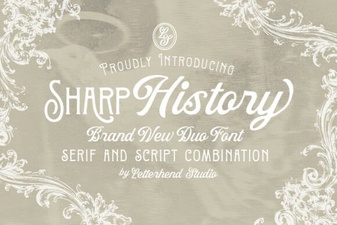 Designing Modern Websites with Sharp History Font
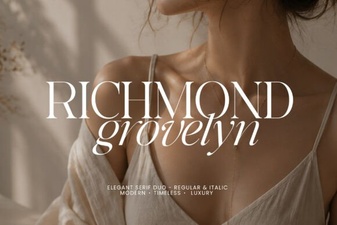 Craft Beautiful Projects with Grovelyn Font Style
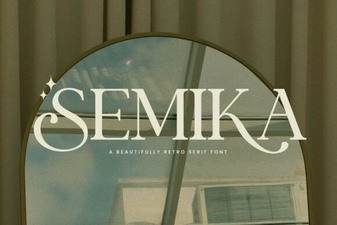 Semika Font: Design Ideas & Creative Applications
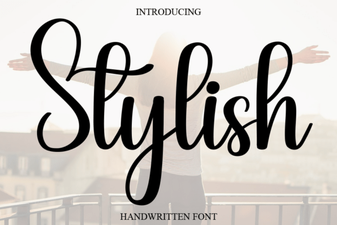 Fresh Font Designs for Modern Projects
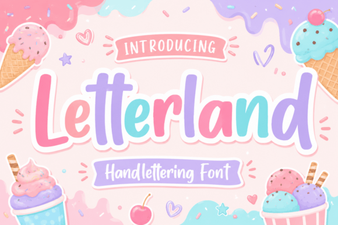 Letterland Fonts for Creative Design Projects
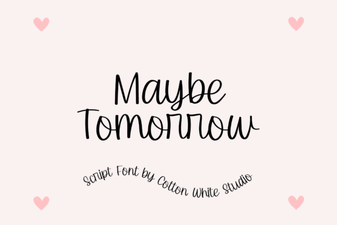 Maybe Tomorrow Font for Creative Projects